

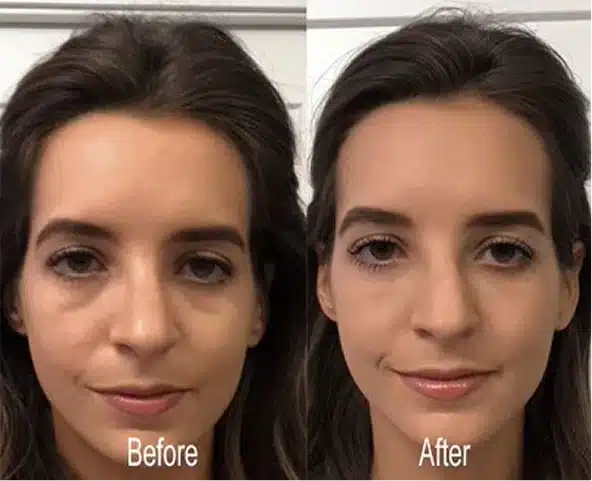
Fillers for under-eye dark circles are one of the most commonly used aesthetic treatments for addressing hollowing, shadowing, and volume loss beneath the eyes. Unlike creams or laser treatments that target skin surface issues, fillers work by restoring structure beneath the skin.
Many cases of “dark circles” are not caused by pigmentation alone, but by a loss of volume in the tear trough area. This creates shadows that make the under-eye area appear darker, more tired, and aged.
Understanding how fillers work, who they are suitable for, and what results to expect is essential before considering this treatment option.
Key Takeaways
- Under-eye fillers correct hollowing and shadow-related dark circles
- They restore lost volume in the tear trough area
- Results are immediate but temporary
- Not suitable for pigmentation-only dark circles
- Proper assessment is essential for safe and natural-looking outcomes
What Are Under-Eye Fillers?
Under-eye fillers are injectable treatments designed to restore volume beneath the eyes.
They are typically made from hyaluronic acid, a substance that:
- Naturally occurs in the body
- Attracts and retains moisture
- Helps maintain skin structure and hydration
When injected into the tear trough area, fillers help reduce the appearance of shadows caused by volume loss.
How Under-Eye Fillers Work
Fillers work by physically filling hollow spaces beneath the skin.
This helps to:
- Smooth the transition between the lower eyelid and cheek
- Reduce shadow formation under the eyes
- Improve light reflection on the skin surface
- Create a more rested appearance
By correcting structural depressions, fillers address one of the most common causes of dark circles.
Types of Dark Circles Suitable for Fillers
Not all dark circles respond to fillers. They are most effective in specific conditions.
Structural or Hollow Dark Circles
Fillers are ideal for individuals with:
- Tear trough hollowness
- Sunken under-eyes
- Deep shadows under lighting
In these cases, the darkness is caused by facial contour rather than skin pigmentation.
Age-Related Volume Loss
As the face ages:
- Fat pads reduce
- Skin support decreases
- Under-eye hollows become more visible
Fillers help restore lost volume and soften ageing-related shadows.
Genetic Tear Trough Formation
Some individuals naturally have:
- Deep-set eyes
- Prominent tear troughs
- Early-onset under-eye shadowing
Fillers can improve appearance even at a younger age in such cases.
Types of Dark Circles Not Suitable for Fillers
Fillers are not a universal solution for all under-eye concerns.
Pigmentation-Based Dark Circles
Fillers do not treat:
- Brown discoloration
- Melanin-related pigmentation
- Sun-induced dark patches
These require laser or skincare-based treatments instead.
Vascular Dark Circles
When darkness is caused by visible blood vessels, fillers may have limited effect unless combined with other treatments.
How Under-Eye Filler Treatment Is Performed
The procedure is minimally invasive and typically performed in a clinical setting.
Consultation and Assessment
A detailed assessment is done to evaluate:
- Type of dark circles
- Skin thickness
- Degree of hollowing
- Facial symmetry
This step is crucial to ensure safe and appropriate treatment.
Injection Process
Fillers are injected using:
- Fine needles or cannulas
- Precise placement in tear trough area
The process is carefully controlled to ensure natural-looking results.
Post-Treatment Adjustment
After injection:
- The filler integrates with surrounding tissue
- Minor swelling may occur
- Results become visible immediately or within a few days
No surgical downtime is required in most cases.
Benefits of Under-Eye Fillers
Under-eye fillers offer several aesthetic benefits when correctly applied.
Immediate Improvement
One of the main advantages is:
- Instant reduction in hollow appearance
- More refreshed under-eye look
Natural Volume Restoration
Fillers restore lost structure rather than changing skin colour.
Improved Light Reflection
Smoother contours help:
- Reduce shadow formation
- Create brighter under-eye appearance
Minimal Downtime
Most individuals return to daily activities shortly after treatment.
Limitations of Under-Eye Fillers
Despite their effectiveness, fillers have limitations.
Temporary Results
Fillers are not permanent and typically last months to over a year depending on:
- Product used
- Individual metabolism
- Treatment area
Not Suitable for All Dark Circles
They do not correct:
- Pigmentation
- Skin thinning alone
- Vascular visibility without hollowness
Requires Skilled Injection Technique
The under-eye area is delicate, and incorrect placement may lead to:
- Uneven results
- Puffiness
- Overcorrection
Proper clinical expertise is essential.
Fillers vs Other Dark Circle Treatments
| Treatment | Best For | Effect |
|---|---|---|
| Fillers | Hollow under-eyes | Structural correction |
| Laser | Pigmentation | Brightening |
| PRP | Thin skin | Skin quality improvement |
| Skincare | Mild cases | Supportive care |
Fillers specifically target volume-related dark circles.
Who Is a Good Candidate for Under-Eye Fillers?
Fillers may be suitable for individuals who:
- Have visible tear trough hollows
- Experience shadow-based dark circles
- Want immediate improvement
- Do not respond to topical treatments
- Have age-related volume loss
When Fillers May Not Be Suitable
Fillers may not be recommended for:
- Severe pigmentation without hollowness
- Active skin infections or inflammation
- Certain anatomical risk factors in the under-eye area
A proper consultation is required before treatment.
How Long Do Results Last?
Results vary depending on individual factors, but generally:
- Improvement is visible immediately
- Full integration occurs within days
- Maintenance treatments may be needed over time
Longevity depends on metabolism and filler type used.
Final Thoughts
Under-eye fillers are an effective aesthetic treatment for dark circles caused by volume loss and structural hollowness. By restoring lost support beneath the skin, fillers reduce shadow formation and create a smoother, more refreshed appearance.
However, they are not suitable for all types of dark circles, particularly those caused by pigmentation or vascular visibility alone.
A professional assessment is essential to determine suitability and ensure natural-looking, balanced results tailored to individual facial structure.
