

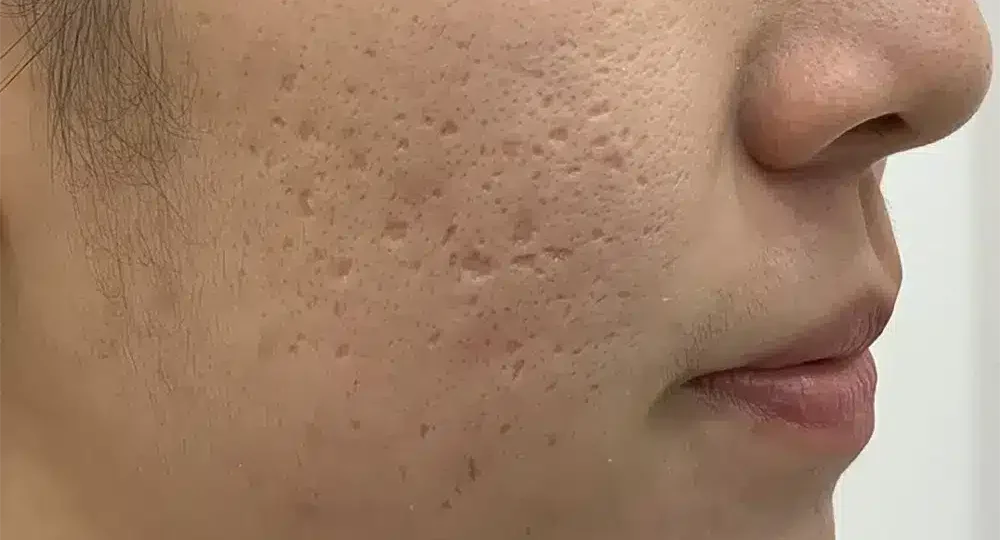
Acne scars vary widely in appearance, depth, and cause, making treatment a complex process. Two commonly recommended treatments, laser therapy and subcision, target different mechanisms of scarring. Determining which is “better” depends on scar type, severity, and the patient’s skin characteristics.
This article explains how laser and subcision work, which scars respond best, expected outcomes, risks, and when combining both approaches provides the most effective results in Malaysia.
Understanding Acne Scar Types
Acne scars are typically atrophic, caused by tissue loss after inflammation. The main types include:
- Rolling scars: Broad, shallow depressions caused by fibrotic bands tethering the skin downward.
- Boxcar scars: Round or oval depressions with defined edges.
- Ice pick scars: Narrow, deep tracts that extend into the dermis.
Each scar type requires a specific treatment approach. One method rarely addresses all types effectively.
What Is Subcision?
Subcision is a minimally invasive procedure designed to treat tethered rolling scars.
How Subcision Works
A small needle or blunt cannula is inserted beneath the scar to:
- Break fibrotic bands anchoring the skin
- Release downward tension
- Stimulate collagen formation during healing
By freeing the tethered skin, subcision allows the depression to elevate naturally over time.
Ideal Candidates for Subcision
- Rolling scars that appear tethered
- Depressions that deepen when skin is stretched
- Patients seeking structural correction
Limitations
- Ineffective for ice pick or superficial boxcar scars
- Does not significantly improve skin texture or pigmentation
What Is Laser Treatment?
Laser treatments improve acne scars through controlled thermal injury to stimulate collagen remodeling and skin resurfacing.
Types of Laser Treatments
- Ablative Fractional Laser
- Creates microscopic columns of skin removal
- Stimulates significant collagen remodeling
- Improves scar edges and skin texture
- Non-Ablative Fractional Laser
- Heats deeper dermal layers without removing surface skin
- Stimulates collagen production
- Shorter downtime and lower pigmentation risk than ablative lasers
Ideal Candidates for Laser
- Boxcar scars and surface irregularities
- Patients with textural concerns
- Scar edge blending
Limitations
- Less effective for tethered rolling scars
- Deep ice pick scars respond poorly without adjunct treatments
Laser vs Subcision: Direct Comparison
| Feature | Subcision | Laser Treatment |
| Targets tethering | Yes | No |
| Improves surface texture | Limited | Yes |
| Best for rolling scars | Yes | Moderate |
| Best for boxcar scars | Limited | Yes |
| Immediate elevation | Possible | No |
| Downtime | Mild bruising 3–7 days | 3–10 days depending on laser type |
| Pigmentation risk | Low | Moderate in darker skin types |
Subcision addresses the mechanical cause of rolling scars, whereas lasers target surface irregularities and collagen stimulation.
Treatment Effectiveness
Effectiveness depends on scar type, severity, and skin characteristics:
- Rolling scars: Subcision often provides the most dramatic improvement.
- Boxcar scars: Lasers are superior for texture and edge refinement.
- Ice pick scars: Require TCA CROSS or other targeted treatments; neither laser nor subcision alone is sufficient.
For most patients, especially those with mixed scar types, one treatment alone will not achieve optimal results.
When Combination Treatment Is Recommended
Combination therapy addresses both structural and textural issues:
- Subcision releases tethered rolling scars first.
- Laser resurfacing follows to smooth edges, improve texture, and stimulate collagen.
This staged approach ensures:
- Correction of depressed scar depth
- Improvement of surface irregularities
- Balanced, natural-looking skin
Combination therapy also reduces the risk of over-treatment and optimizes collagen remodeling.
Treatment Sessions and Recovery
Subcision
- Usually requires 1–3 sessions depending on severity
- Sessions spaced 4–6 weeks apart
- Recovery involves mild bruising, resolving in 3–7 days
Laser
- Typically 3–5 sessions spaced 4–6 weeks apart
- Recovery depends on laser type: non-ablative lasers have minimal downtime, ablative lasers may require 7–10 days
- Collagen remodeling continues for several months
Patients often see gradual improvement as the skin heals and collagen builds. Immediate results are generally modest, except when combined with other treatments like fillers.
Safety Considerations for Malaysian Skin
Patients with Fitzpatrick III–V skin types, common in Malaysia, are prone to post-inflammatory hyperpigmentation (PIH). Safe practice includes:
- Conservative laser settings
- Proper treatment spacing
- Strict sun avoidance
- Pre-treatment acne control
Subcision has a lower pigmentation risk but may cause temporary bruising. Both procedures are safe when performed by experienced clinicians.
Limitations
- Neither subcision nor laser can completely erase scars.
- Multiple sessions are required.
- Results vary based on individual healing and collagen response.
- Realistic expectations are essential, visible improvement, not perfection, is the goal.
Conclusion
Laser and subcision are complementary rather than competing treatments:
- Subcision is most effective for tethered rolling scars.
- Laser therapy is best for boxcar scars, surface irregularities, and texture improvement.
- For mixed or complex scarring, combination therapy offers the most comprehensive improvement.
Accurate scar assessment, proper sequencing, and staged treatments are key to achieving balanced, natural, and safe outcomes in Malaysian skin types.
Frequently Asked Questions
1. Which treatment is better for rolling scars?
Subcision is more effective for rolling scars because it releases fibrotic bands pulling the skin downward.
2. Which treatment is better for boxcar scars?
Laser treatment, especially fractional lasers, is superior for improving boxcar scar edges and overall skin texture.
3. Can laser and subcision be combined?
Yes. Subcision is usually performed first to release tethered scars, followed by laser treatment to improve texture and stimulate collagen.
4. How many sessions are typically needed?
Subcision usually requires 1–3 sessions; laser treatment typically requires 3–5 sessions, spaced 4–6 weeks apart.
5. Is there downtime with these treatments?
Subcision causes mild bruising for 3–7 days. Laser downtime depends on type—non-ablative lasers are minimal, ablative lasers may require 7–10 days.
