

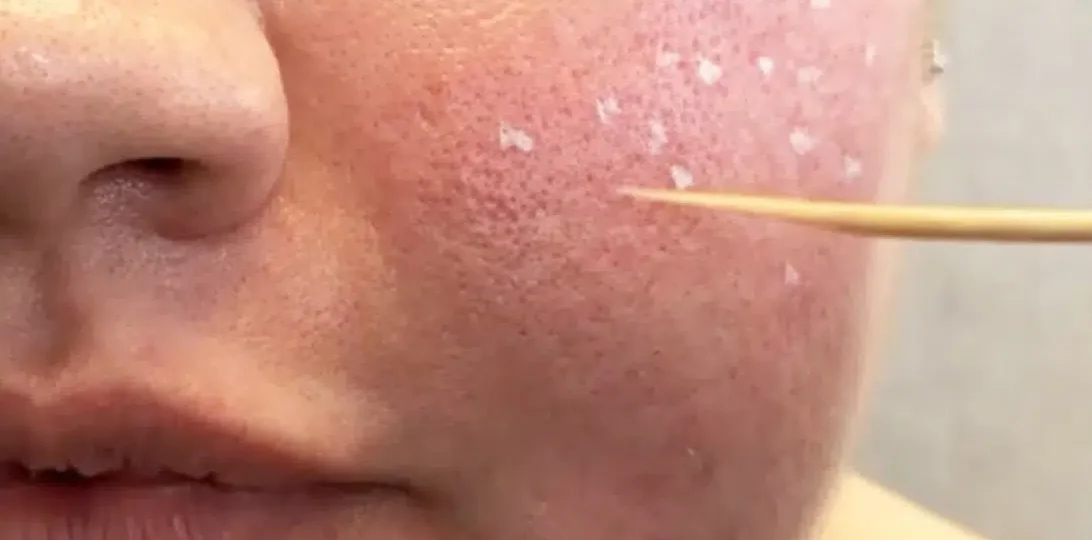
TCA CROSS is a targeted chemical reconstruction technique designed specifically for deep, narrow acne scars that do not respond well to lasers or microneedling alone. In Malaysia, it is commonly used as part of a structured acne scar treatment plan.
This article explains what TCA CROSS is, how it works, which scars benefit most, what results to expect, and why it is often combined with other treatments rather than used in isolation.
What Is TCA CROSS?
TCA CROSS stands for Trichloroacetic Acid Chemical Reconstruction of Skin Scars. It involves the precise application of high-concentration trichloroacetic acid (TCA) directly into individual acne scars using a fine applicator.
Unlike chemical peels that treat the entire face, TCA CROSS:
- Targets only the scar base
- Spares surrounding healthy skin
- Triggers controlled chemical injury within the scar
- Stimulates collagen production from the bottom up
The goal is to narrow, elevate, and soften deep scars over time through repeated collagen remodeling.
Which Acne Scars Respond Best to TCA CROSS?
TCA CROSS is most effective for deep, narrow scars with sharply defined edges.
Best indications:
- Ice pick scars
- Narrow, deep boxcar scars
- Pitted scars resistant to other treatments
Less suitable for:
- Rolling scars
- Broad shallow scars
- General texture irregularities
For these broader scar types, treatments such as microneedling or laser resurfacing may be more appropriate.
How TCA CROSS Works on Deep Acne Scars
When high-strength TCA is applied into the scar pit, it causes:
- Localized protein coagulation
- Controlled chemical injury at the scar base
- Activation of fibroblasts
- Gradual collagen deposition within the scar
Over multiple sessions, this process:
- Raises the depth of the scar
- Narrows the scar opening
- Improves surface blending with surrounding skin
The improvement is progressive, not immediate, and depends on the body’s collagen response.
What to Expect During the Procedure
TCA CROSS is typically performed in a clinic setting.
During treatment:
- Skin is cleansed and prepared
- TCA is carefully applied into each scar
- A frosting effect appears briefly, indicating chemical action
- No large treatment areas are involved
Procedure duration:
- Usually 10–20 minutes, depending on scar count
Anaesthesia is usually not required, though mild discomfort or stinging may be felt during application.
Recovery and Downtime
Downtime from TCA CROSS is localized rather than widespread.
Common post-treatment effects:
- Small scabs within treated scars
- Redness around individual scars
- Mild swelling
Healing timeline:
- Scabs form within 1–2 days
- Scabs fall off naturally in 5–7 days
- Pinkness may persist temporarily
Patients are advised not to pick scabs, as this increases the risk of pigmentation or scarring.
How Many TCA CROSS Sessions Are Needed?
TCA CROSS is not a one-time treatment.
Typical session planning:
- 3–6 sessions
- Spaced 4–6 weeks apart
Each session contributes incremental improvement as collagen builds up within the scar. Deep scars often require patience and consistency for meaningful results.
Effectiveness of TCA CROSS for Acne Scars
TCA CROSS is one of the most effective treatments for ice pick scars, which are otherwise difficult to treat.
Expected outcomes include:
- Reduced scar depth
- Narrower scar openings
- Improved skin surface blending
However, TCA CROSS does not improve overall skin texture, pigmentation, or wide scars. Because of this, it is rarely used alone in comprehensive acne scar management.
Why TCA CROSS Is Often Combined with Other Treatments
Most patients have mixed acne scar types, not just one scar pattern. TCA CROSS addresses deep pits but does not correct surrounding texture or broader depressions.
For this reason, it is frequently incorporated into Combination Treatments for Acne Scars, such as:
- TCA CROSS for ice pick scars
- Microneedling for surface texture
- Laser treatment for scar edges and collagen remodeling
This layered approach allows each treatment to target a specific structural problem, producing more balanced and natural results.
Safety Considerations for Malaysian Skin
Malaysian skin types (Fitzpatrick III–V) are more prone to post-inflammatory hyperpigmentation, making precision and aftercare critical.
Key safety factors include:
- Proper TCA concentration selection
- Accurate scar-only application
- Strict sun avoidance post-procedure
- Use of broad-spectrum sunscreen
When performed by experienced clinicians, TCA CROSS can be safely used on darker skin with controlled risk.
Who Is a Suitable Candidate for TCA CROSS?
TCA CROSS may be suitable for patients who:
- Have deep ice pick or narrow boxcar scars
- Did not respond adequately to lasers or microneedling
- Are willing to undergo multiple sessions
- Can comply with aftercare and sun protection
It may not be suitable for patients with:
- Active acne
- Keloid tendencies
- Poor wound healing
A professional evaluation is necessary to determine candidacy and treatment sequencing.
Conclusion
TCA CROSS is a highly targeted and effective treatment for deep acne scars, particularly ice pick scars that are resistant to other therapies. While it does not improve overall skin texture, it plays a crucial role in comprehensive acne scar management.
When integrated with microneedling and structured combination treatment strategies, TCA CROSS helps address the most challenging scar types, leading to more complete and clinically meaningful improvement.
Frequently Asked Questions
1. What does TCA CROSS stand for and what is it used for?
TCA CROSS stands for Trichloroacetic Acid Chemical Reconstruction of Skin Scars. It is used to treat deep acne scars, especially ice pick and narrow boxcar scars, by stimulating collagen from within the scar.
2. Is TCA CROSS effective for all types of acne scars?
No. TCA CROSS is most effective for deep, narrow scars. It is not suitable for rolling scars or general skin texture issues, which require other treatments.
3. How many TCA CROSS sessions are needed to see results?
Most patients need 3 to 6 sessions, spaced about 4–6 weeks apart, for gradual and visible improvement.
4. Is TCA CROSS painful?
The procedure may cause brief stinging or discomfort during application, but it is generally well tolerated and does not usually require anesthesia.
5. Is TCA CROSS safe for Malaysian skin types?
Yes, when performed correctly by trained professionals. However, Malaysian skin types have a higher risk of pigmentation changes, making proper technique and sun protection essential.
